
SERENDIPITOUS WARM CLEVER HONEST PHOTO SERIES
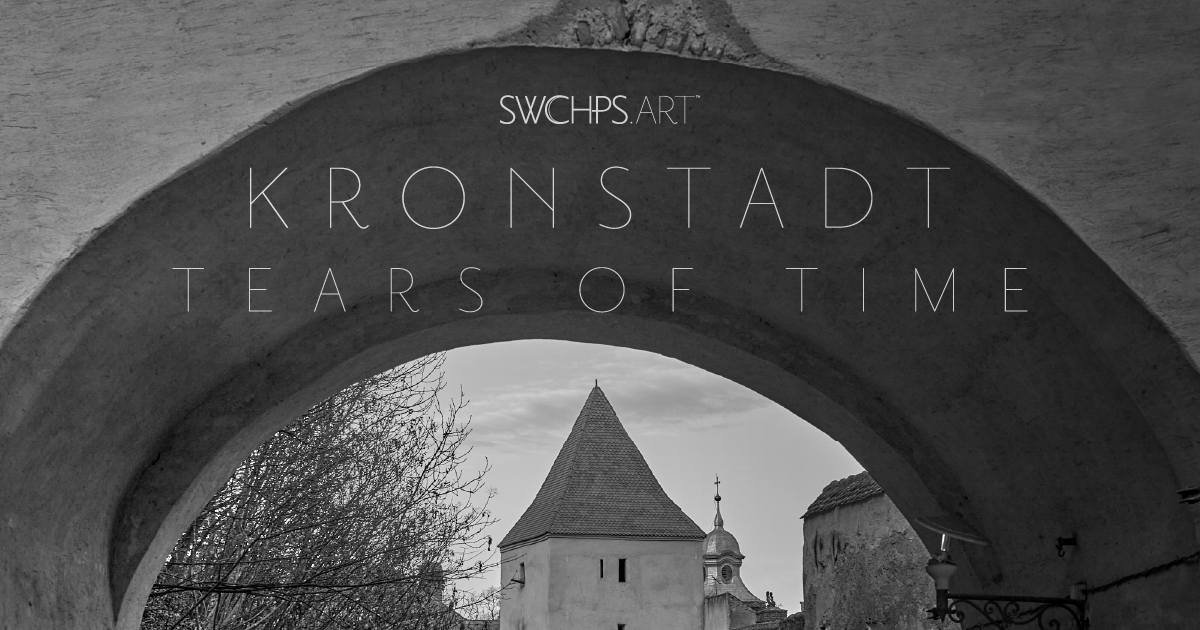
KRONSTADT:
TEARS OF TIME
A photographic autumn promenade across the historic center of Braşov, Romania — the ancient walled city of Kronstadt. The photographs were taken from September to December 2019; the original text was developed in 2021 and rendered in 2025.

Zo and I had just arrived to retreat into a writing project — to complete the first draft of our travelogue Facing East — in an easeful Eastern European town, among mountains.
We had our plan, and it was a wondrous plan. Yet soon, without apparent cause, I began falling ill.


Zo and I had recently been in upstate New York, where I’d spent time photographing out in nature. There, I noticed that I’d been bitten by some unknown insect on the back of my thigh. I never saw the insect but assumed there had been one as I developed a curious skin reaction: a small reddish oval that expanded for a few days, turning dark blue, and then disappeared, just as quickly and mysteriously as it had first appeared.
Once we settled in the picturesque Transylvanian town of Braşov, Romania, I found myself driven to walk in the dusk. Zo and I continued to work on our writing, and whenever possible, despite my developing ailments (exhaustion, a frail knee, relentless back pain, and a growing restlessness), I went outside to walk and photograph the streets of the walled town of Kronstadt, the historic center of modern-day Braşov.


As I strolled around the old town, I was captivated by its ancient, scarred face, which hinted at a slowly evolving, convoluted, and often challenging history.


— around the time of the Fourth Crusade and the ensuing fall of the Byzantine Empire — the Kingdom of Hungary welcomed Saxon settlers to its Transylvanian territories to develop agriculture and mining. For the settlers’ protection, around the year 1211, by order of King Andrew II, the Teutonic Knights built three fortified settlements along the Carpathian route to Constantinople. The main one was named Corona, or Kronstadt in German, meaning the Crown’s City.
Benefiting from its location along the trade route between Western Europe and the Near East, the city’s wealth and architecture flourished. Amid the splendid Transylvanian forest, Kronstadt’s streets, homes, schools, public buildings, churches, and fortifications rose and mounted, expanded and gradually aged, for hundreds of years.


I’d first visited this place a few years before, in 2014, inspired by chance. In the spring of that year, I took an all-night train from Budapest, Hungary, to Bucharest, Romania — a route that crosses the Carpathian range.
After an uncomfortably long, almost sleepless night in a run-down, seating-only, second-class train car, the morning’s first light revealed an unexpected, mesmerizing sight: the horizontal and vertical expanses of the Carpathian Mountains. I was so overtaken by the view that I decided to return to this area during my summer vacation in 2014 — and again in 2018, and now in 2019.


At times magical, at times dirty and broken down, cuddled by clouds and mountains, the old town of Kronstadt lives on as the heart of Braşov, amid the constant tears of time.


and went back to the United States. I stayed behind in the old town, watching the rapidly changing seasons.
One night, soon after Zo left, I began feeling intoxicated. I developed rashes from my leg to my elbow, on the right side of my body, the side of the mysterious insect bite. Could it be something I ate? I cut down on anything that could be causing an allergic reaction, but no amount of abstention seemed to help.
It would take a year for me to realize that I harbored inside me a pernicious intruder. All I knew was that I was growing sleepless and exhausted — but in the depths, a ferocious attack was taking place, one my body was barely able to fend off.


Attempting to solve the mystery, I pondered what could be the cause of my terrible malaise.
Having discarded all possible triggers for an allergic reaction, I told myself, “The bite, back in July, in upstate New York — that must be it!” I concluded that, three months before, I must have been bitten by some kind of spider, my body was still clearing the remnant toxin, and I was experiencing an allergic reaction to it. An antihistamine should help, I thought. A daily dose worked against the rash, but not the exhaustion. Yet the antihistamine got me through my last month in Romania.
Night after night, day after day, I was feeling, gradually, more and more debilitated. Unbeknownst to me, in the darkness, a microscopic monster, Borrelia burgdorferi, was casting a whole world for itself inside me.


when I met with a friend of mine who lived in town and who told me about a dream she’d recently had. She was terrified by an apocalyptic nightmare. “A forbidding omen,” she said.
In her nightmare, during the course of terrible events, she kept hearing the word four. She thought it meant the world would end in four days, months, or years. Trying to comfort her and lighten the mood, I said: “You know, ‘four’ could also have another meaning. It could stand for: one ‘four-titude,’ two, ‘four-sight,’ three, ‘four-ce,’ and four—”
Before I could say the fourth “four,” she interjected: “No, you don’t understand. I heard the word for the number four in Romanian, and the sound is patru.”


“That’s fine,” I said. “Listen, I don’t think the world is going to end anytime soon. However, if you ever find yourself going through a tough time, remember these “fours”:
“One: You are strong, so always remember and trust your own fortitude.
“Two: You are smart and will always find a way out of any challenge so long as you can see past your own fear. Turn off the fear and install instead your good brain: Have foresight.
“Three: At times, the challenge may be not outside but inside you. The pain can stagnate and drown you. At those time, forgivness can light your way. Remember to forgive — yourself and others who may have wronged you — so that you may be able to start each day anew.
“Your fortitude, your foresight, and your capacity to forgive: These will get you across any nightmare. These are your great inner force.”
For some reason, it suddenly felt as though I was telling all these things to myself. Was I in need of fortitude? Had I lost my foresight? Was there anything to forgive?

in December, I was feeling a little better. The antihistamine had done the trick, up to a point. I didn’t know it then, but it wasn’t only helping with the “allergic reaction.” The antihistamine was, in fact, interfering with the pathogen’s metabolism, thus slowing down the spread of the infection.
It wouldn’t be until many months later that I would fall seriously ill — with arthritic, muscular, neurological, cognitive, and cardiological complications — and finally realize that there was something really wrong, run tests, and discover the true cause of my malaise. The four fours would, indeed, soon be dearly needed.
The year 2020 (according to numerology, a year 4) was soon to begin, and as my Romanian friend had premonished, the whole world would be shaken up by it — by a devilish pandemic and the fear it struck in us all, one way or another.


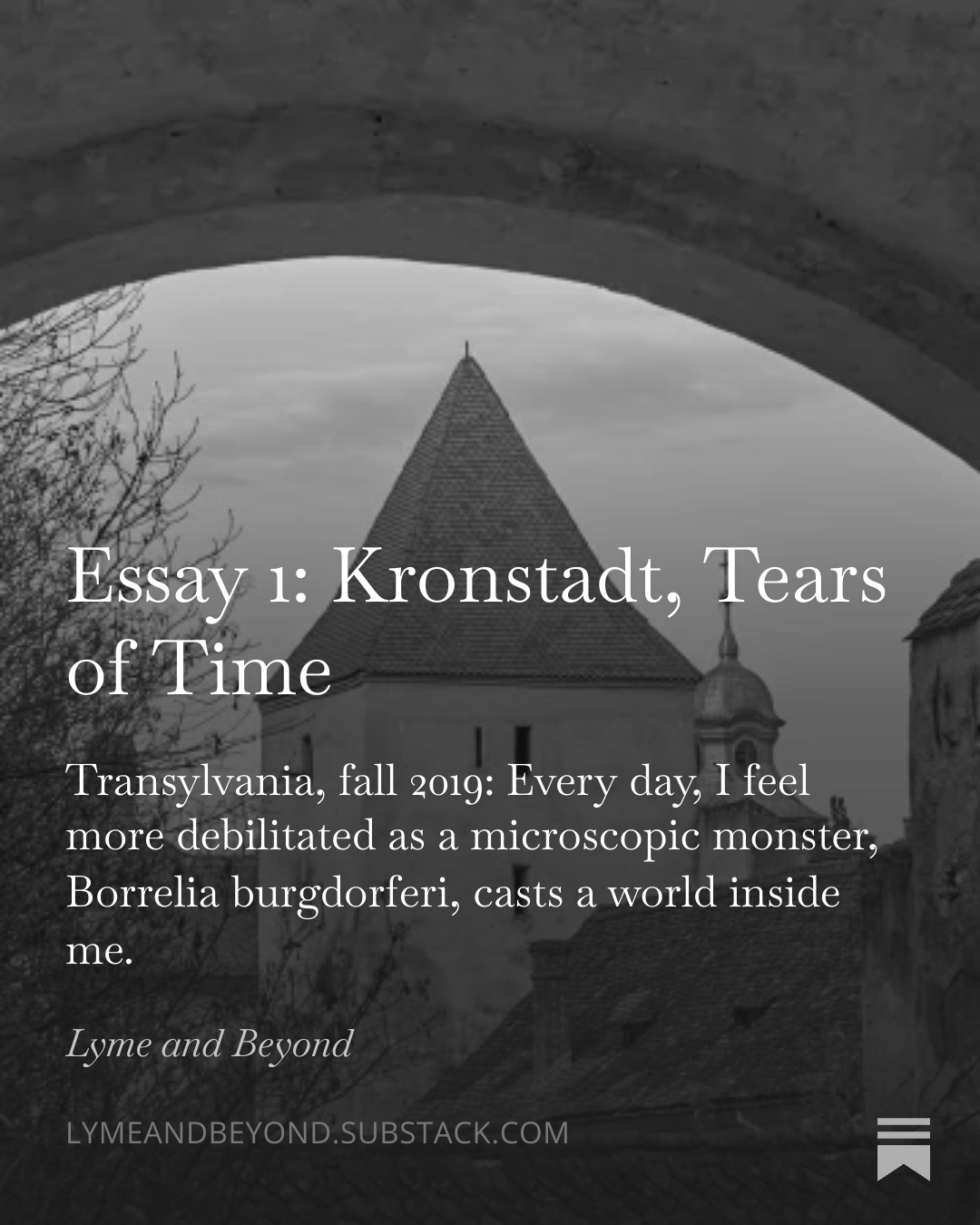
Find the Substack version of this photo essay in the series Lyme and Beyond
Visit the SWCHPS art™ store

Museum-quality photographic prints and photo books — coming soon!
SOCIAL MEDIA